
Trinnov Optimizer explained simply
Trinnov Optimizer Explained Simply
The Trinnov Optimizer is often considered one of the most advanced acoustic correction systems on the market. Yet, many users still struggle to understand what it actually does.
Some summarize it as a simple automatic EQ. In reality, the Trinnov Optimizer goes much further than classic frequency correction.
To understand its value, you must first grasp one essential point: in an audio system, the listening room often has a far greater impact than the electronics themselves.
The Real Problem: The Listening Room
Even with excellent speakers, a room can cause huge bass peaks, significant dips, phase problems, time delays, or an imprecise stereo image. Two identical systems can therefore sound completely different depending on the room in which they are installed.
This is precisely what the Trinnov Optimizer seeks to correct.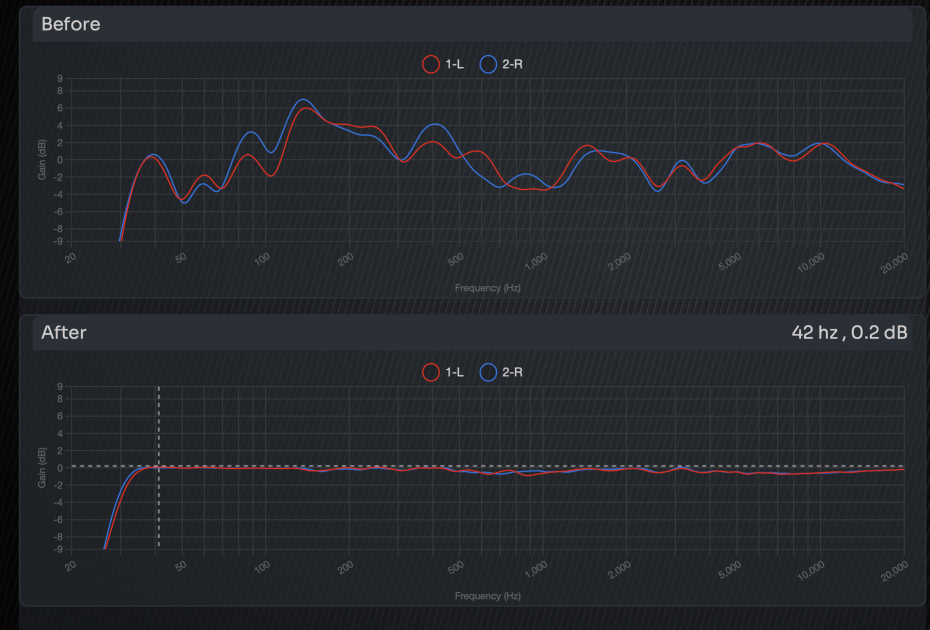
Source: Trinnov Optimizer Technology
The Trinnov Optimizer Does More Than Just Equalize
Many acoustic correction systems essentially limit themselves to modifying the frequency response. The Trinnov Optimizer also acts on phase, timing, speaker alignment, and the spatial coherence of the system.
This is one of the big differences between Trinnov and simpler solutions.
The system not only seeks to correct tonal balance but also to improve how the speakers work together in space.

Source: Vic Malvolti Mastering
The Trinnov 3D Mic
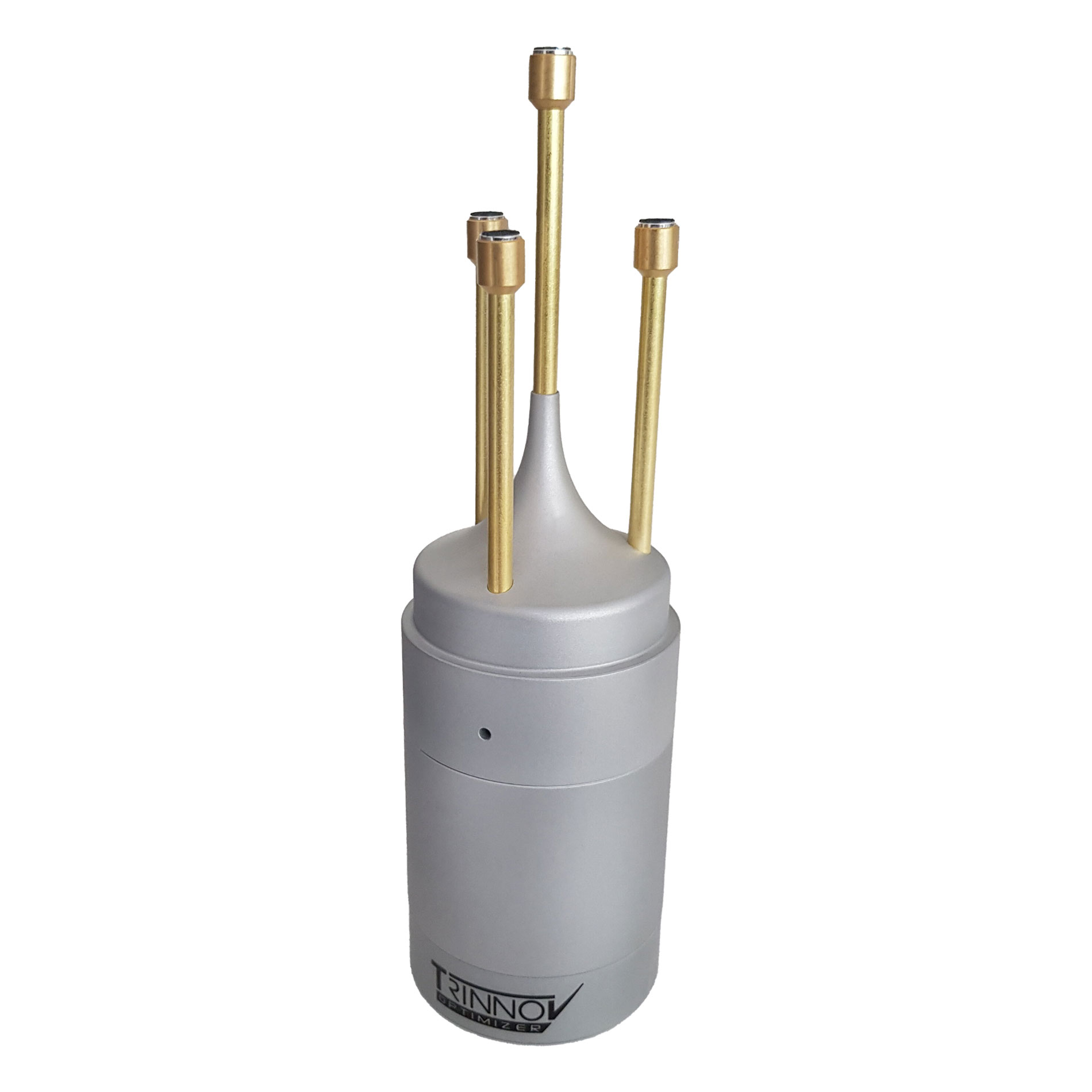
One of Trinnov's most recognizable elements is its 3D measurement microphone. Unlike a conventional microphone, this system allows for precise analysis of speaker position in space: height, angle, distance, and spatial coherence.
The processor can then detect placement problems with extreme precision and adjust the system accordingly.
This is what enables advanced functions such as speaker remapping in immersive installations.
Why Timing and Phase Are So Important
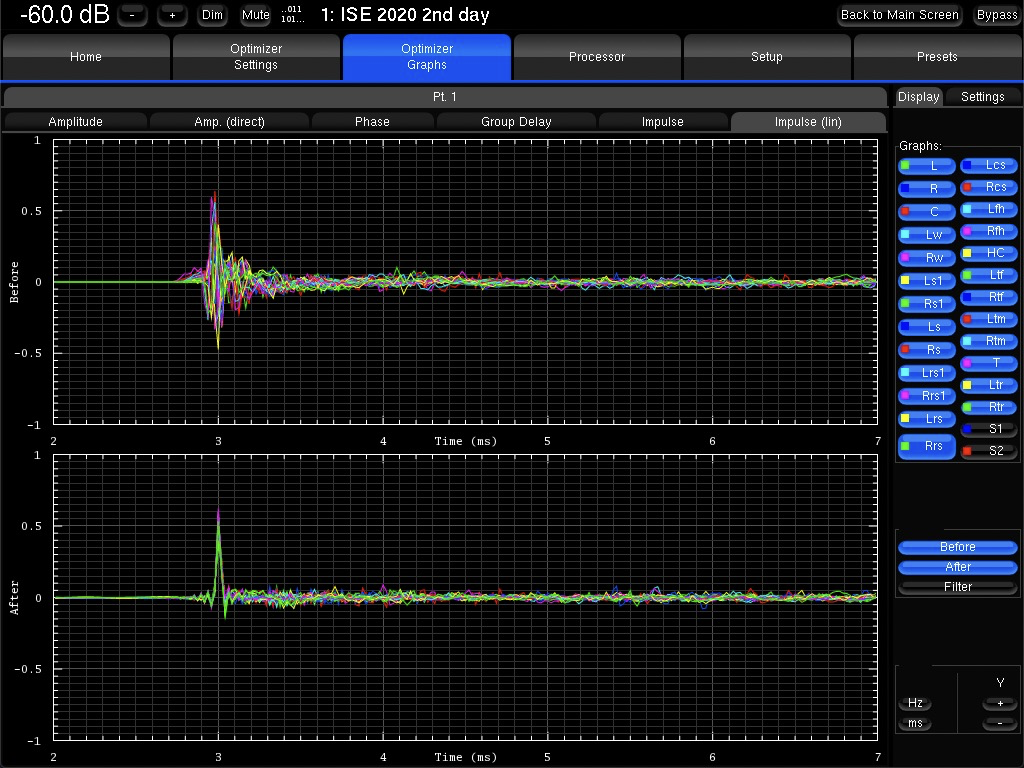
In an audio system, speakers don't always arrive perfectly in phase or at exactly the same time at the listening position. Even small deviations can degrade the stereo image, bass precision, or the overall coherence of the system.
The Trinnov Optimizer corrects these problems by very precisely adjusting the delays and phase of the speakers.
This is an aspect often underestimated by users who still associate acoustic correction with a simple graphic EQ.
Source: Trinnov Optimizer Technology
Why Studios Use Trinnov
The Trinnov Optimizer is used in many mastering studios, Atmos rooms, and professional control rooms. The reason is simple: professionals need reliable and consistent monitoring.
An engineer must be able to make mixing or mastering decisions that will translate correctly elsewhere. Trinnov's role is precisely to reduce errors introduced by the room to achieve a more predictable listening experience.
In many modern studios, DSP and acoustic correction are now an integral part of professional monitoring.
Image to insert: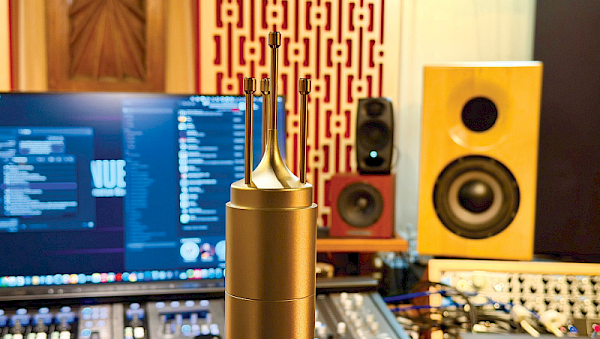
Source: Trinnov
Does Trinnov Replace Acoustic Treatment?
No, and this is a very important point.
Even a system as advanced as Trinnov does not replace good acoustics, correct speaker placement, or appropriate passive treatment. DSP cannot eliminate the laws of physics.
However, when combined with a properly treated room, it can greatly improve system coherence, bass precision, stereo imaging, and translation.
A Modern Approach to Monitoring
For a long time, many audiophiles considered DSP to be a signal degradation. Today, more and more professionals, on the contrary, consider that an uncorrected system is often less faithful due to errors introduced by the room.
It is precisely for this reason that systems like Trinnov have become so important in modern professional environments.
The goal is not to "change the sound" but to reduce acoustic errors to obtain a more coherent, precise, and reliable listening experience.
Discover Trinnov: Trinnov Nova